The WTF Chain: How a Pink Flamingo Is Connected to Your Next Breath
Flamingos aren’t born pink. Shrimp aren’t either. And that chain ends with the oxygen you breathe.
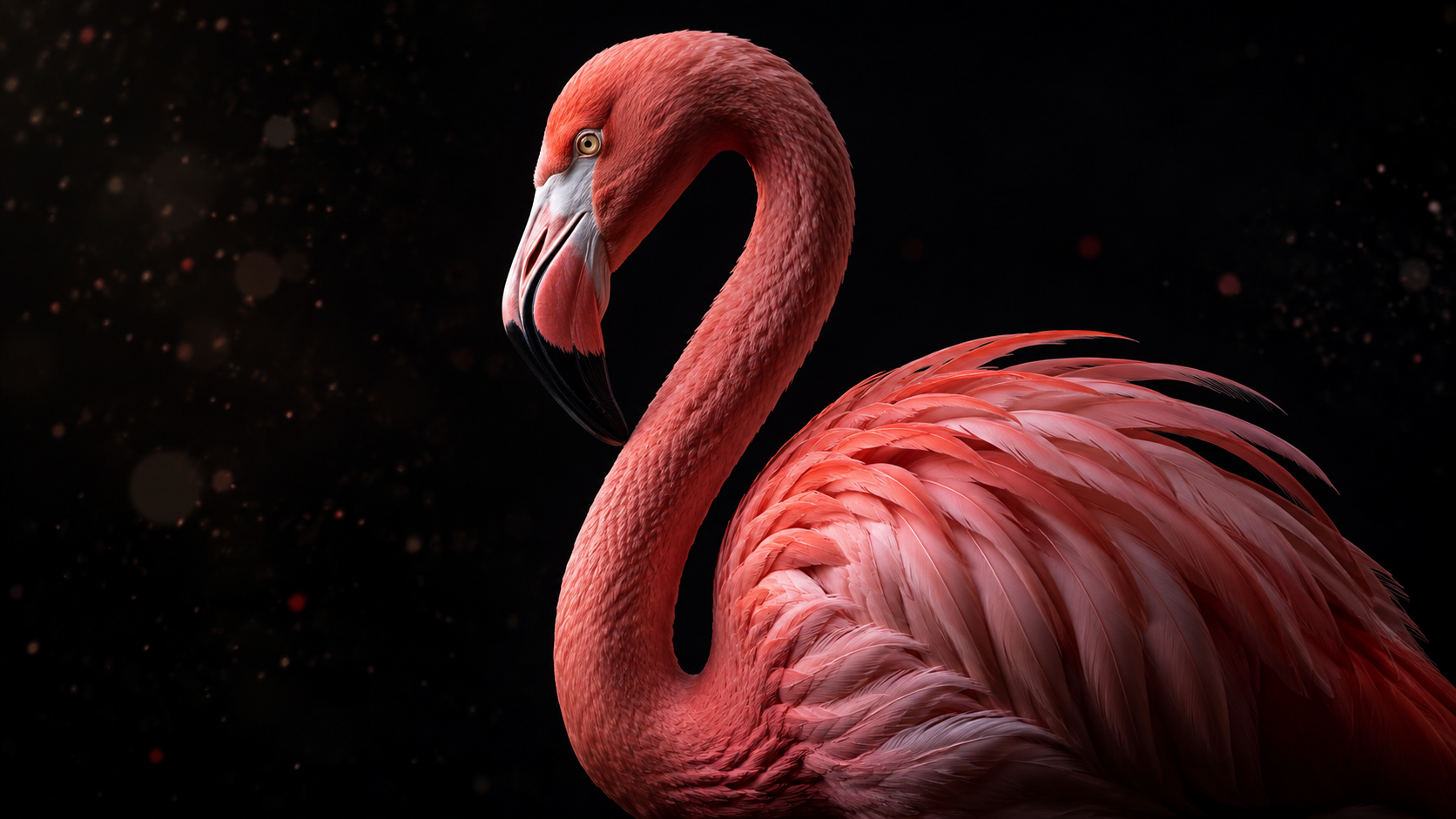
Key idea
Nothing exists completely alone: even a pink flamingo belongs to an invisible network.
I am going to show you something that sounds ridiculous:
a pink flamingo
is connected to the breath you just took.
Not as a metaphor.
As a system.
That is it.
Now let’s begin.
Link 1 — Flamingos Are Not Born Pink
Flamingos are born white.
Or grayish.
Kind of ugly, if we are being honest.
The pink comes later, and it comes entirely from outside of them.
From their diet.
Flamingos eat small crustaceans, algae, and other organisms that contain pigments called carotenoids.
Those pigments enter through food, get processed by the body, and eventually accumulate in their feathers and skin.
In captivity, if flamingos do not receive enough pigments in their diet, the color fades.
Not because they are sick.
But because the pink is not truly theirs.
They borrow it from what they eat.
Link 2 — The Color Comes From Further Back
The simplified version says:
“Flamingos are pink because they eat shrimp.”
But the real chain is more interesting.
Those crustaceans also get their pigments from something even smaller: microalgae and other microorganisms.
So the chain looks like this:
- Microalgae → crustaceans → flamingos
And sometimes it is even more direct:
- Microalgae → flamingos
because some flamingos also consume algae directly.
Something similar happens with shrimp: raw shrimp are usually not pink.
They look grayish. Translucent. Slightly strange.
The pigment is already there, but hidden beneath proteins.
Heat changes those proteins.
And the color appears.
In shrimp, heat reveals the pigment.
In flamingos, the pigment slowly builds up through digestion.
Different mechanism.
Same idea:
the color does not appear out of nowhere.
It was already moving through the chain.
Link 3 — This Stops Being Curious and Becomes Personal
Microalgae do not just produce pigments.
They also produce a huge portion of the planet’s oxygen.
Phytoplankton performs photosynthesis: it absorbs carbon dioxide, uses sunlight, and releases oxygen.
According to NOAA, scientists estimate that around half of Earth’s oxygen production comes from the ocean, mainly from photosynthetic plankton.
They are not trees.
They are not forests.
They are not visible.
They are floating in the ocean right now while you read this.
You cannot point to a specific breath and say:
“that one came from the sea.”
But without that invisible world, your breathing would not be the same.
Link 4 — The Ocean Changes, and the Network Changes
Here I need to be precise, because this matters.
Phytoplankton needs sunlight.
But it also needs nutrients.
Many of those nutrients arrive through ocean mixing: cold water rising from deeper layers and carrying the materials plankton needs to survive.
When the ocean warms, that mixing can weaken in certain regions.
Cold water does not rise the same way.
Nutrients do not circulate the same way.
And some phytoplankton communities can change or decline.
This does not happen equally across the entire ocean.
But where it happens, the network changes.
The full chain would look something like this:
- Microalgae produce pigments and oxygen.
- Crustaceans absorb pigments.
- Flamingos eat crustaceans and become pink.
- The ocean warms.
- Nutrient mixing changes.
- Phytoplankton can decline in critical regions.
- And the system supporting your breathing begins to shift.
It is not a perfect straight line.
It is a network.
And networks do not always collapse dramatically.
Sometimes they slowly deform.
Link 5 — Flamingos Are Not Just Decoration
Flamingos do not sustain the planet’s oxygen supply.
But in certain wetlands, salt lagoons, and aquatic ecosystems, they do play a real role.
As they feed, they filter water, disturb sediments, and redistribute nutrients.
Studies on flamingos in saline wetlands have documented effects on algae, invertebrates, microorganisms, and local ecosystem dynamics.
They do not control the planet.
But within their network, their absence matters.
The Chain, Summarized
- Microalgae → pigments → crustaceans → flamingos
- Microalgae → photosynthesis → oxygen → you
- Warmer oceans → nutrient changes → phytoplankton changes
- Flamingos → real effects on local ecosystems
The lesson is not:
“everything causes everything.”
That would be too easy.
And it would not be true.
The Next Chain
This does not only happen in the ocean.
It also happens much closer to you.
Like your breakfast.
A cup of coffee can look simple.
But behind it there are animals, stress, milk, agriculture, transport, energy, and invisible decisions.
The next WTF Chain starts there.
See you in the next chain.
CORE out.
Quick Questions
Are flamingos really born white?
Yes. Flamingos are born white or grayish. Their pink color appears later because of carotenoid pigments found in their diet.
Do microalgae produce oxygen?
Yes. Phytoplankton and other microalgae perform photosynthesis and produce a huge portion of the planet’s oxygen. A common scientific estimate is around half of Earth’s oxygen production.
Do flamingos control the planet’s oxygen?
No. The connection is indirect: microalgae, pigments, food chains, oxygen, and ecosystems are all part of interconnected networks. Flamingos have real ecological effects, but local ones.
Watch video
Video
Keep exploring
More from Quiz · Core
More posts in this format — then jump across routes whenever you want.
Your Brain vs Reality: Can You Read "PARIS IN THE THE SPRING" Without Failing?
Your brain does not see reality exactly the way you think. It constantly fills in, skips and reconstructs information.
What Do These Images Have in Common? The Test That Reveals How Your Brain Connects Patterns
Your brain detects relationships even before you are consciously aware of them. This quiz puts that system to the test.
Real Image or AI-Generated?
AI-generated images are crossing the point where most people stop noticing the difference.
How Many Hearts Does an Octopus Have?
Octopuses feel alien for a reason: much of their biology breaks human intuition.
AtomicCurious · Core
Now turn it into action
The idea doesn’t end here. You can keep exploring it on YouTube or take it further in the newsletter.
Resources
Recommended resources
Book
Entangled Life — Merlin Sheldrake
Explores how invisible fungal networks connect entire ecosystems beneath the surface.
View on Amazon →
Tool
Carson MicroBrite Plus
A pocket microscope for exploring textures, organisms, and hidden details in the everyday world.
View on Amazon →
App
iNaturalist
A tool for identifying species and turning curiosity into observations that contribute to science.
Explore tool →
Some links are affiliate links. We may earn a commission at no extra cost to you.