Your Brain vs Reality: Can You Read "PARIS IN THE THE SPRING" Without Failing?
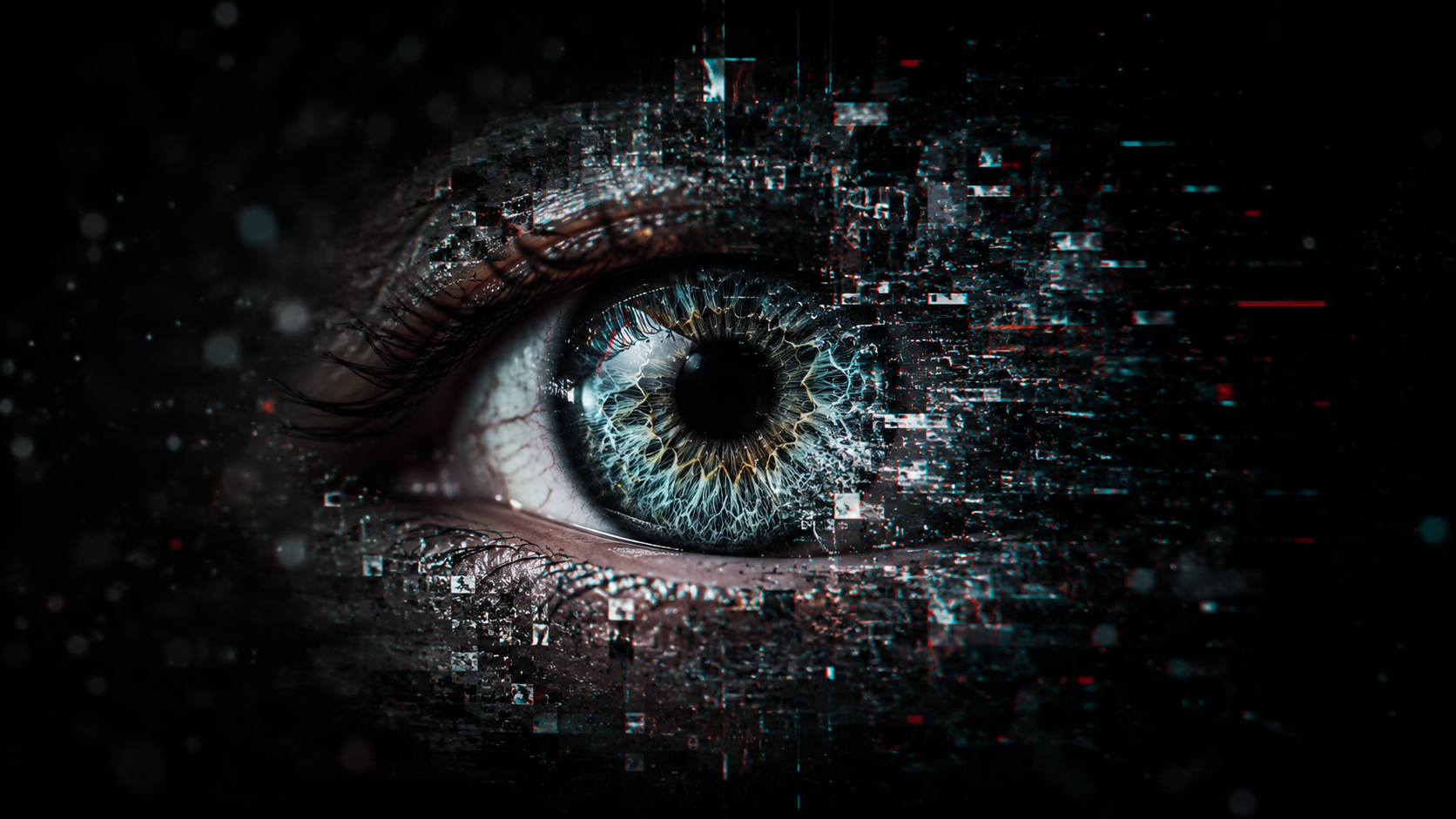
Your brain does not see reality exactly the way you think. It constantly fills in, skips and reconstructs information.
Key idea
You do not experience raw reality. You experience a useful version your brain builds fast enough for you to survive, but not always accurately enough for you to be right.
I want to show you something uncomfortable.
Your brain is not showing you reality exactly as it is.
It is showing you a version.
A version built from light, sound, attention, memory, prediction, and a lot of invisible editing.
Not because your brain is broken.
Because your brain is doing what it was designed to do.
Fast.
Efficient.
Useful.
Not perfect.
And once you see this, a strange question appears:
“Did I perceive it… or did I build it?”
That question is the whole point of this article.
Because the more you understand perception, the harder it becomes to believe your brain is just a camera pointed at the world.
It is not.
It is more like an interface.
It filters.
Predicts.
Completes.
Corrects.
And then quietly hands you the result as if it were obvious.
The rule of this experiment
Before we begin, there is one rule.
This is not an article about reality being fake.
That would be lazy.
And honestly, less interesting.
Reality exists.
The world is not imaginary.
Objects are not floating dreams.
Gravity is still very committed to its job.
The point is different:
your access to reality passes through a biological system that has limits.
Your eyes do not give you the world.
They give your brain signals.
Your ears do not give you meaning.
They give your brain vibrations.
Your memory does not give you the past.
It gives your brain fragments.
And your brain turns all of that into an experience.
That experience can be extremely useful.
But useful does not always mean complete.
And complete does not always mean accurate.
So in this article, we are going to look at four moments where your brain edits reality:
- a sentence your brain may rewrite
- a sound that changes when you look at it
- a gorilla people missed while paying attention
- a memory that can feel real even when it was rebuilt
Each one reveals the same hidden system.
Your brain is not recording reality.
It is rendering it.
Test 1 — The sentence your brain rewrote
Read this quickly:
“PARIS IN THE THE SPRING”
How many times does the word “THE” appear?
Do not answer from instinct.
Count.
There are two.
But many people read only one.
Not because they cannot read.
Not because they are distracted.
Because the brain often reads in patterns.
The phrase “IN THE SPRING” is familiar.
Your brain has seen that structure many times before.
So instead of processing every word as if it were completely new, it predicts the pattern.
And most of the time, prediction helps.
It lets you read quickly.
It lets you understand messy handwriting.
It lets you recognize a word even if one letter is missing.
But there is a cost.
Sometimes your brain does not read what is there.
It reads what it expects to be there.
That is why you can write a message, check it three times, feel certain it is perfect, and then someone else finds the typo in three seconds.
Your brain saw the intended sentence.
Not necessarily the actual sentence.
Tiny editor.
Very fast.
Very confident.
Slightly suspicious.
Verdict
Your brain can edit text before you notice the edit.
That does not mean it failed.
It means it predicted.
And prediction is one of the main ways your brain survives a world that is too complex to process from scratch every second.
Test 2 — The sound that changes when you look at it
Now move from reading to hearing.
There is a famous illusion called the McGurk effect.
The strange part is this:
what you see can change what you hear.
When someone speaks, your brain does not only process the sound coming into your ears.
It also uses the movement of the person’s mouth.
Usually, that is helpful.
If you are in a noisy room, watching someone’s lips can make speech easier to understand.
Very useful.
Very elegant.
But if the audio and the mouth movement do not match, your brain has a problem.
The sound says one thing.
The mouth suggests another.
And your brain does not always raise a warning.
It tries to solve the conflict.
Sometimes it combines the signals and creates a perception that was not exactly in the audio alone.
Same sound.
Different visual information.
Different experience.
If you want to try it, search for the McGurk effect and watch one of the demonstrations.
Try it with your eyes open.
Then close your eyes.
Then open them again.
The sound did not change.
Your brain changed.
That is beautiful.
And slightly concerning.
Because it means your senses are not separate channels reporting to you independently.
They edit each other.
Verdict
Your brain does not simply receive sound.
It builds a listening experience from multiple signals.
And when those signals conflict, the final version can feel completely real.
Even if it was constructed.
Test 3 — The gorilla people missed while paying attention
In 1999, Christopher Chabris and Daniel Simons ran one of the most famous attention experiments in psychology.
Participants watched a video of people passing a basketball.
Their task was simple:
count how many times the players wearing white passed the ball.
In the middle of the video, a person in a gorilla suit walked through the scene, stopped, beat their chest, and walked away.
The gorilla was large.
Visible.
Not subtle.
And still, nearly half of the participants did not notice it.
Not because their eyes were closed.
Not because the gorilla was invisible.
Not because they were stupid.
Because they were focused.
That is the important part.
When your attention is locked onto a task, your brain filters information based on what it considers relevant.
Not everything that enters your eyes becomes part of your conscious experience.
Something can be right in front of you and still not enter your reality.
This is called inattentional blindness.
And it does not only happen in laboratory videos.
It happens when you drive while looking at your phone.
It happens when someone is talking and you are already preparing your answer.
It happens when you are searching for one specific thing and miss something obvious.
Looking is not the same as noticing.
Seeing is not always perceiving.
Verdict
Your brain does not show you everything.
It shows you what it thinks matters right now.
That filter is useful.
Until it hides the gorilla.
Test 4 — The memory that never happened
Now comes the most personal part.
Think of a childhood memory.
One that feels clear.
One that feels yours.
Maybe the first time you rode a bike.
A birthday.
A fall.
A place where you spent a lot of time.
Now ask something uncomfortable:
how do you know that memory is exactly real?
Not emotionally real.
Not meaningful.
Exactly real.
The reason this question matters is that memory is not a recording.
It is a reconstruction.
Every time you remember something, your brain does not simply replay an untouched file.
It rebuilds the memory using fragments:
- what happened
- what you think happened
- what people told you later
- photos you saw afterward
- emotions attached to the event
- the story you have repeated over time
Researchers such as Elizabeth Loftus helped show that memory can be changed.
And in another famous study, researchers used a manipulated photograph of a hot air balloon ride that never happened.
Participants were shown real childhood images along with a fake one.
After interviews, some people began to believe the event had happened.
Some even generated details.
How they felt.
What they saw.
What they remembered.
They were not lying.
Their brains had constructed a memory.
And that memory felt real.
That part always makes me pause.
Because it means your brain can be honest…
and still be wrong.
Verdict
Your brain does not only build what you perceive now.
It also rebuilds what you think happened before.
And the rebuilt version can feel just as real as the original.
The hidden system
Now connect the four tests.
In the first one, your brain rewrote a sentence using familiar patterns.
In the second one, your brain changed a sound using visual information.
In the third one, your brain missed a gorilla because attention was busy.
In the fourth one, your brain could build a memory of something that never happened.
Four different cases.
One principle:
your brain does not give you a copy of reality.
It gives you an interpretation.
Your eyes capture light.
Your brain builds image.
Your ears capture vibrations.
Your brain builds sound.
Your attention selects details.
Your brain builds importance.
Your memory stores fragments.
Your brain builds story.
So when you say:
“I saw what happened.”
A more precise version might be:
“My brain built an experience using part of what happened.”
And when you say:
“I remember what happened.”
A more precise version might be:
“My brain rebuilt a story using fragments of the past.”
Less comfortable.
Much more real.
Reality is not fake. Perception is an interface.
This does not mean everything is fake.
It does not mean reality does not exist.
It does not mean anyone can invent anything and be right.
It means something more interesting:
perception is an interface.
You do not see the full code.
You see the icons.
A simplified version that lets you move, decide, react, and survive.
That is not a flaw.
That is the point of an interface.
Your phone does not show you every electrical process happening inside it.
It shows you icons, buttons, messages, images, and sounds.
A simplified world you can use.
Your brain does something similar.
It gives you a usable world.
Not the full system.
Not every signal.
Not every detail.
A working version.
Built quickly.
With incomplete data.
That is impressive.
And deeply suspicious.
The uncomfortable scale of the problem
A classic estimate says your sensory system can send around 11 million bits of information per second to the brain.
Your conscious mind processes only a tiny fraction of that.
Sometimes it is cited as around 50 bits per second.
Do not treat those numbers as a perfect measurement.
Treat them as an idea.
Almost everything your brain processes never appears on your conscious screen.
Before you say:
“I saw.”
Before you say:
“I heard.”
Before you say:
“I remember.”
Your brain has already filtered.
Predicted.
Completed.
Ignored.
Corrected.
Built.
What you call reality is not everything that is happening.
It is the version your brain decided you could handle.
Not the full version.
The useful version.
How to notice your brain editing reality
You cannot stop your brain from building reality.
That is what it does.
But you can get better at noticing when the build might be unstable.
Here are five moments to be careful:
1. When something feels too obvious
If your brain says, “I know exactly what this says,” slow down.
That is when it might be reading the pattern instead of the details.
2. When two senses disagree
If what you see and what you hear do not match, your brain may force them into one experience.
That experience can feel real.
Even when it is a compromise.
3. When you are intensely focused
Focus is powerful.
But it is also a filter.
The more locked in you are, the more likely you are to miss what does not fit the task.
4. When you remember something with total confidence
Confidence is not the same as accuracy.
A memory can feel clear because it has been rebuilt many times.
Not because it is perfect.
5. When someone remembers the same event differently
Sometimes one person is lying.
But sometimes both people are honestly defending different reconstructions.
That is annoying.
And very human.
Try it today
Do this right now
- 1Read a sentence slowly after reading it quickly. Look for what your brain skipped.
- 2Search for the McGurk effect and test it with eyes open and closed.
- 3Notice one moment today when focus made you miss something else.
- 4Think of a strong memory and ask which parts came from photos, stories, or repetition.
- 5Before saying 'I am sure,' ask whether you perceived it or built it.
Quick Questions
Does this mean reality is fake?
No. Reality exists. The strange part is that your brain does not hand you every detail directly. It builds a usable version from limited signals, attention, memory, and prediction.
Why does the brain edit reality?
Because the world sends too much information at once. If your brain tried to process everything in full detail, you would be very accurate… and probably very slow. So it uses patterns, shortcuts, filters, and guesses. Useful. Fast. Not always perfect.
Is memory unreliable?
Memory is useful, but it is not a clean recording. It is rebuilt from fragments, and those fragments can be shaped by emotion, repetition, photos, and what other people tell you. Tiny archive. Very dramatic editor.
So, did you perceive it or build it?
The honest answer is often:
both.
Your brain is not a camera.
It is not a recorder.
It is not a perfect archive.
It is a system that builds reality in real time.
With what it has.
With what it expects.
With what it needs.
And you are the result of that construction.
Which, if you ask me…
is much more interesting than simply seeing the world as it is.
If you want to keep exploring, you can keep reading on AtomicCurious.
And if you want the next explorations before everyone else, join the newsletter.
⚛️ AtomicCurious — Exploring science, technology & smart curiosities.
Watch video
Video
Keep exploring
More from Quiz · Core
More posts in this format — then jump across routes whenever you want.
The WTF Chain: How a Pink Flamingo Is Connected to Your Next Breath
Flamingos aren’t born pink. Shrimp aren’t either. And that chain ends with the oxygen you breathe.
What Do These Images Have in Common? The Test That Reveals How Your Brain Connects Patterns
Your brain detects relationships even before you are consciously aware of them. This quiz puts that system to the test.
Real Image or AI-Generated?
AI-generated images are crossing the point where most people stop noticing the difference.
How Many Hearts Does an Octopus Have?
Octopuses feel alien for a reason: much of their biology breaks human intuition.
AtomicCurious · Core
Now turn it into action
The idea doesn’t end here. You can keep exploring it on YouTube or take it further in the newsletter.
Resources
Recommended resources
Free read
Article: The Predictive Brain
A Quanta Magazine article about how the brain predicts perception instead of processing every detail from scratch.
Read article →
Best starting point
The Invisible Gorilla — Christopher Chabris & Daniel Simons
The best follow-up to the attention part of this episode. A readable book about why we miss more than we think.
View book →
Best intro
The Brain: The Story of You — David Eagleman
A clear and accessible introduction to how the brain shapes perception, memory, identity, and experience.
View book →
Some links are affiliate links. We may earn a commission at no extra cost to you.